








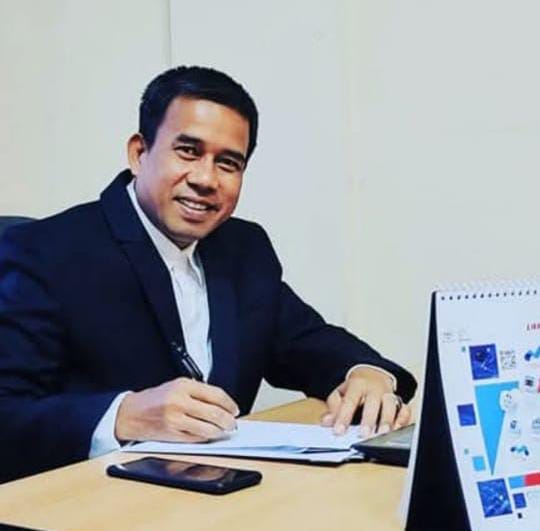
Bireuen, Aceh — MediaViral.net
The world is no longer on the brink of transformation. That transformation has already occurred. The year 2026 marks a decisive turning point in the global economic order, driven by intensifying geopolitical tensions, rising energy prices, and increasing protectionism that is fragmenting the international system.
According to the latest report from the International Monetary Fund, global economic growth in 2026 is projected at around 3.1 percent. Under more severe pressure scenarios, this figure could decline to nearly 2 percent—a level historically associated with a significant global slowdown.

Meanwhile, the World Trade Organization estimates that global trade growth will range between 1.4 and 1.9 percent. This slowdown reflects weakening structural foundations that have long supported global economic expansion.
Tensions between the United States and China have evolved beyond conventional trade disputes into a broader contest over economic systems and technological dominance. Export controls, investment restrictions, and efforts to reduce economic dependence are accelerating this shift.
At the World Economic Forum 2026, global leaders acknowledged that the era of open globalization is giving way to a more protective and uncertain environment, where national interests increasingly shape economic policy.
Ongoing conflict in the Middle East has intensified global pressures. Oil prices hovering around 100 US dollars per barrel are contributing to rising inflation and increasing production costs across nearly all sectors, from major industries to everyday household needs.
Global supply chains, still recovering from the pandemic, are facing renewed disruption. Industrial relocation, restrictions on raw material flows, and shifting trade routes are reshaping the global economic landscape in lasting ways.
Amid these developments, Indonesia stands at a critical moment. Declining export demand, currency volatility, and rising costs of energy and food imports present serious challenges to the national economy.
However, these pressures also present strategic opportunities. With abundant natural resources and a strong domestic market, Indonesia has the potential not only to withstand global shocks but also to emerge as a significant economic force in Asia.
Within this national context, Aceh holds strategic importance. Its agricultural strength, energy potential, and proximity to international trade routes position it as a key contributor to national economic resilience.
Arizal Mahdi, Chairman of Relawan Peduli Rakyat Lintas Batas, described the current global situation as a defining moment requiring clear and decisive action. He emphasized the importance of reducing dependence on an unstable global system by strengthening national economic self-reliance.
He stated that reinforcing agriculture, energy, and domestic industry is essential to ensuring long-term economic sovereignty.
“In a fractured world, only self-reliant nations will endure.”
He also warned that without strong government intervention, the burden of global economic pressures will fall most heavily on ordinary citizens, particularly those most vulnerable to rising costs and economic instability.
Analysts agree that Indonesia must act with urgency. Accelerating industrial development, reducing reliance on imports in strategic sectors, expanding export markets, and strengthening food and energy security are now critical priorities.
Maintaining fiscal and monetary stability will also be essential in managing evolving external pressures.
The global economic tensions of 2026 highlight a reality that can no longer be ignored: the world is entering a fundamentally different phase, where existing systems are being reshaped by new and often unpredictable forces.
At this pivotal moment, the choice is clear—remain dependent on a fragile global system or build a strong and sovereign economic future.
For Indonesia, this is not merely a policy decision. It is a defining moment that will shape its place in the world. (mediaviral.net)